Pushback in software teams isn’t about ego. It’s about survival. Projects collapse faster when nobody speaks up than when someone says “no.” The trick is knowing how to push back without stalling the system.
From a QA Lead’s Seat: When Devs or PMs Don’t Want to Hear It
You’re the last line of defense between a half-baked feature and production. Pushback here usually looks like:
- Against Devs: flagging a regression, blocking a release, or questioning “just one more hotfix.” They’ll think you’re slowing them down. You’re not. You’re saving them from support hell.
- Against PMs: refusing to “sign off” because test coverage is incomplete or timelines are unrealistic. PMs live in deadline mode; QA lives in risk mode. That clash is inevitable.
The move that works? Anchor on evidence. Screenshots, logs, reproducible steps — the language nobody can ignore. And don’t confuse pushback with finger-pointing. Structured, data-anchored communication is how you survive the friction — it’s the same foundation that builds strong feedback loops.
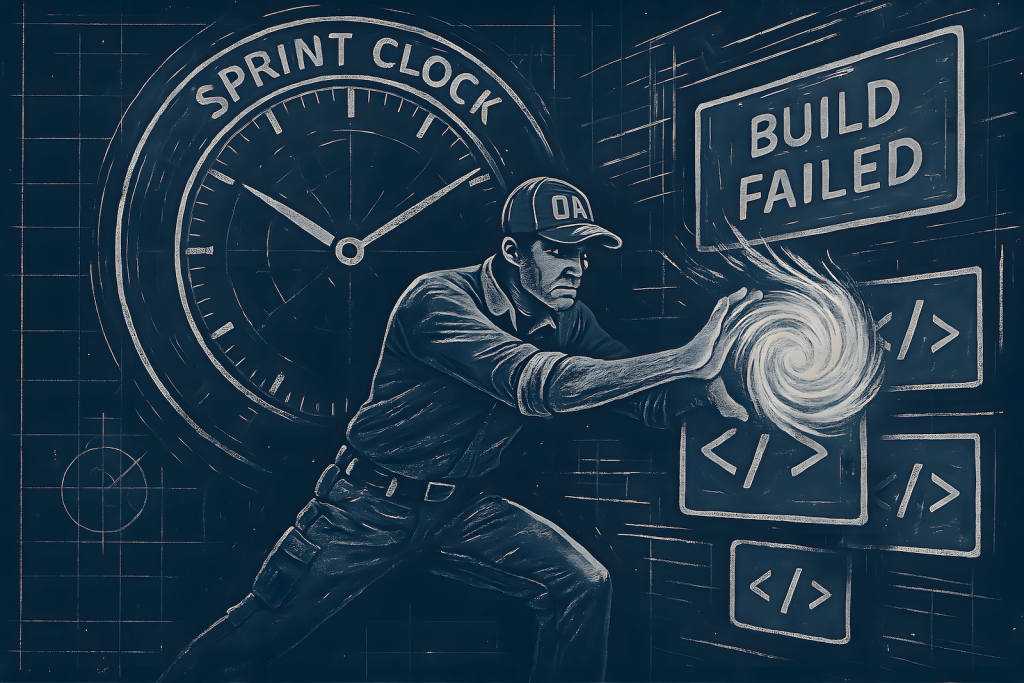
When QA Pushes Back on You (PM/Lead Perspective)
Now flip it. You’re the PM or lead, and QA flags a release blocker 24 hours before go-live. Or a dev questions client requirements mid-sprint. Or worse — a client calls out something that slipped.
Pushback here tests your operating system. Do you treat it as insubordination? Or as the friction that keeps the wheels from flying off?
The smart PM stance:
- Triage, don’t dismiss. Decide if the pushback is structural (requirements wrong), tactical (test coverage missed), or noise (low-priority bug raised as urgent).
- Absorb the heat. Your job is shielding the team from escalation, not throwing QA under the bus.
That’s the difference between a delivery lead and a project manager who just takes notes.
The Stress Load: What Pushback Actually Costs
Pushback isn’t free. It carries stress for everyone involved:
- QA leads get pegged as “difficult.”
- Devs feel blocked.
- PMs absorb client frustration.
- The whole team watches timelines slip.
And stress doesn’t stop at Jira tickets. It creeps into your health — migraines, hypertension, and sleepless nights are the same survival issues that show up when burnout sets in. It also eats away at mental load — decision fatigue, burnout loops, and running on fumes are exactly what separates a victim mindset from an operating mindset.
Ignoring the stress load turns pushback into resentment. Managing it turns it into discipline.
Factors That Warp Pushback
Pushback is contextual. Same words, different timing, totally different outcome:
- Delays: If the project’s already behind, pushback feels like sabotage even when valid.
- Timelines: Hard deadlines turn QA concerns into “luxuries.”
- Project state: Early sprint pushback is process improvement; late sprint pushback is firefighting.
- Team morale: Low-trust teams see pushback as personal attacks. High-trust teams see it as guardrails.
This is where feedback culture and pushback intersect. A team that normalizes structured communication doesn’t panic when someone raises the red flag. They trust it’s a system safeguard, not a personal jab.
Bottom Line
Pushback is the most undervalued project tool. Done right, it prevents disasters, saves morale, and forces teams to face reality. Done wrong, it turns into politics and finger-pointing.
If you’re in QA, don’t back down when the data says “stop.”
If you’re in PM, don’t confuse friction with insubordination.
If you’re in dev, remember: QA’s pushback is what keeps your 2 AM pager silent.

QA Overlord. Professional breaker of deadlines, Fan of “quick fixes”





0 thoughts on “Pushback Isn’t Politics — It’s Survival in QA and Delivery”