Breaking Down the QA Basics: Tools, Test Plans, and Common Practices

This post introduces essential QA tools, test plans, and practices crucial for QA professionals. It covers must-have tools like Jira and automation frameworks, illustrates the components of a test plan, and explains common practices such as smoke testing and bug triage. Mastering these basics is vital for a successful QA career.

From Bug Hunter to Tech Leader: Why QA Builds Careers That Last

QA tester progressing to tech leadership role, showing career growth from testing to team management

Quality Assurance isn’t just about finding bugs—it’s a training ground for versatile tech careers. Learn why QA professionals develop systems thinking, translation skills, and user empathy that open doors to leadership, Scrum mastery, UX design, and development roles.

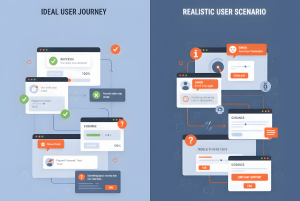
Beyond Happy and Sad Paths: Testing for Real Users, Not Perfect Ones

Traditional happy and sad path testing only covers ideal success and basic failures. Real users don’t follow scripts—they make mistakes, encounter errors, and need systems that guide them through problems. Learn how to test for the users you actually have, not the ones you wish you had.

How to Write Effective Bug Reports (with Examples)

Updated December 2025 to reflect modern QA communication patterns, cross-team dynamics, and decision-driven bug reporting in real delivery environments. Writing effective bug reports is not just about documenting defects, but about creating reproducible, actionable communication that developers can act on without friction. Strong bug reports combine clear titles, precise reproduction steps, expected versus actual behavior, environment details, and appropriate severity and priority classification. As QA responsibilities grow, effective reporting becomes less about volume and more about judgment, helping teams balance technical risk, delivery constraints, and real-world impact while keeping fixes focused and efficient.

Stop Writing Test Cases Nobody Reads: The Simplified vs Detailed Debate

Stop writing test cases nobody reads. Learn when to use simplified vs detailed test case templates, and how to match documentation level to actual needs.

The simplified vs detailed test case debate misses the point. The real question is what level of detail actually serves your testing without creating documentation nobody maintains. Learn when to use lightweight cases, when comprehensive documentation matters, and how to avoid both extremes.

How to Successfully Balance Your QA and PM Responsibilities for Optimal Project Management

Table of Contents Introduction Balancing multiple roles in tech projects is no small feat. What’s even more challenging is when you find yourself wearing both the Product Manager (PM) and Head of QA hats. As a PM, your primary goal is to ensure that the project moves forward smoothly, meets deadlines, and satisfies stakeholders. Meanwhile, … Read more

How QA Professionals Can Thrive in a Tech-Driven World

In today’s rapidly evolving digital landscape, the role of Quality Assurance (QA) professionals has become more integral than ever. With the increasing complexity of tech products and services, QA professionals are tasked with ensuring that technology not only meets functional requirements but is also reliable, efficient, and user-friendly. As industries embrace Agile methodologies and continuous … Read more

How to Create Effective Test Cases: A Comprehensive Guide

Creating effective test cases is a cornerstone of quality assurance (QA) testing. Well-crafted test cases not only improve the efficiency of the testing process but also enhance the quality of the final product. Whether you’re a manual tester, an automation expert, or just starting in QA, understanding the fundamentals of creating robust test cases is … Read more