Manual testing is not a stepping stone to automation. It is how you learn which flows are worth automating at all. Every QA engineer who has inherited a test suite full of scripts that pass consistently and catch nothing useful has already lived the consequence of skipping that foundation. The scripts run. The coverage number looks fine. And then something breaks in production that any human tester would have caught in ten minutes because they actually used the product. That is not an automation problem. That is a judgment problem, and judgment comes from manual testing.
This is the argument I have been making for years. What changed recently is that AI made it more true, not less. AI tools can now generate test scripts from plain language, suggest edge cases from code diffs, and accelerate automation setup faster than any individual engineer. Which means teams that go straight into AI-generated automation without a manual tester who understands the product are now producing brittle, context-free tests at a speed that was previously impossible. The failure mode is the same. It just arrives faster.

Manual Testing Is the Judgment Layer, Not the Starting Point You Leave Behind
The framing that manual testing is something you do before you know how to automate is exactly backwards. Manual testing is how you build the understanding that makes automation worth writing. When you sit with a flow manually, you learn where the edge cases live, which paths users actually take, and which behaviors are stable enough to assert against. You cannot get that from a spec document. You cannot get it from a code review. You get it from using the product the way a real user would, with the instinct of someone trained to look for what breaks.
Automation engineers who skip this phase write tests that are technically correct and practically useless. Their scripts cover the happy path because that is what the requirements described. They miss the edge cases because they never explored the feature without a script telling them where to look. Their regression suites grow large and slow and fragile because nobody made a judgment call about which tests were actually worth maintaining. The automation is not the problem. The missing foundation is.
This is the distinction that gets lost when the conversation gets framed as manual versus automated. It is not a competition. Manual testing produces the knowledge that automation executes at scale. If you remove manual testing from the front of that sequence, you do not get faster coverage. You get faster noise.
What Automation Is Actually For
Automation earns its place on stable, repeatable behavior that has already been understood manually. Regression testing is the clearest case. Once you know a flow works, once you have manually verified the edge cases and confirmed the expected behavior, automating that check is the right call. It runs faster than a human, runs the same way every time, and frees your manual testers to focus on the parts of the product that are still changing or still unclear.
CI/CD pipelines are built on this principle. Continuous deployment means your test suite runs on every merge, sometimes dozens of times a day. That cadence is only operationally viable if the automated checks are fast, stable, and precise. The way you get fast, stable, and precise automation is by having a manual tester who understood the product well enough to write meaningful assertions in the first place. The pipeline does not create that. It depends on it.
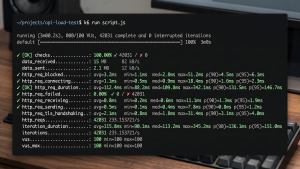
Performance and load testing belongs in the automation column by necessity. No manual process can simulate thousands of concurrent users against an endpoint. Tools like k6 handle that class of testing precisely because it is a programmatic problem, not a judgment problem. The judgment call is knowing which endpoints are worth load testing and what thresholds matter, and that call still comes from someone who understands the product.
The maintenance problem that makes large automation suites expensive is also a manual testing problem in disguise. Scripts break when UIs change because the locators were written by someone who did not fully understand what the element did or why it was important. A tester with real product knowledge writes more resilient scripts because they target behavior, not implementation. The Playwright codegen and brittle test refactoring post covers what this looks like in practice.
Where AI Fits, and Why It Makes the Argument Stronger
AI did not change the manual vs automation equation. It stress-tested it, and the foundation held.
AI tools can generate Playwright scripts from plain language descriptions. They can suggest test cases based on code diffs, surface known failure patterns from documentation, and accelerate the setup work that used to take hours. This is genuinely useful, and any QA engineer not using it for the right tasks is working slower than necessary. The practical guide to using AI in QA testing covers where it actually saves time versus where it creates the illusion of coverage.
The problem is what happens when teams hand AI-generated test scripts to engineers who have never manually tested the flows those scripts cover. The scripts look complete. The assertions are syntactically correct. The coverage report shows green. And the product ships with a logic error that the script was never designed to catch because nobody with product knowledge ever reviewed what the script was actually asserting. This is the brittle, context-free automation problem at scale, and AI makes it worse for teams that were already skipping the foundation.
For teams with strong manual testers, AI changes the math in the right direction. Using AI to generate exploratory testing checklists means a tester walks into a session with better coverage hypotheses. Using AI to draft initial test cases for a new API contract saves setup time before a human reviews and sharpens them. Using AI to identify fragile selectors in an existing suite reduces maintenance overhead. In every one of these cases, the AI is accelerating work that a manual tester is still responsible for directing. The AI-assisted manual testing workflow breaks this down in detail if you want the specific process.
The hardest version of this problem is teams shipping code that was written by AI. AI-generated code can pass all of its own tests and still contain logic errors that only surface under conditions the original prompt never specified. Testing AI-generated code requires a manual judgment layer that sits on top of standard coverage, not a larger automation suite. The hybrid QA workflow for AI-generated code documents what that looks like on a real project, because the standard approach does not cover it.
The Decision Framework
Every testing task runs through three filters. The first is whether the task requires human judgment to produce useful output. If yes, it belongs in the manual column. Exploratory testing on a new feature, UX evaluation, ad hoc verification on a one-time scenario, and any testing where the expected behavior is still being discovered all belong here. The second filter is whether the task is stable, repeatable, and will run more than a handful of times. If yes, it belongs in the automation column after it has been manually verified first. The third filter is whether AI can accelerate either the setup or the coverage quality without removing the judgment layer. If yes, layer it in.
Most testing tasks map cleanly to one of these. The friction point is usually the transition, knowing when a flow has been understood well enough to hand to automation and when it still needs manual attention. That call is not made by a coverage report. It is made by a QA engineer who has been in the product. The balancing manual, automation, and AI-driven testing post works through this framework against real project scenarios if you want the applied version.
The skill that matters most in 2026 is not choosing between manual and automated. It is understanding the product deeply enough to make that call with confidence, and then knowing how to use automation and AI to execute at scale once the judgment has been made. That is what separates a QA engineer who is useful from one who is just producing coverage numbers.





0 thoughts on “Manual vs Automated Testing: You Can’t Automate What You Don’t Understand Yet”