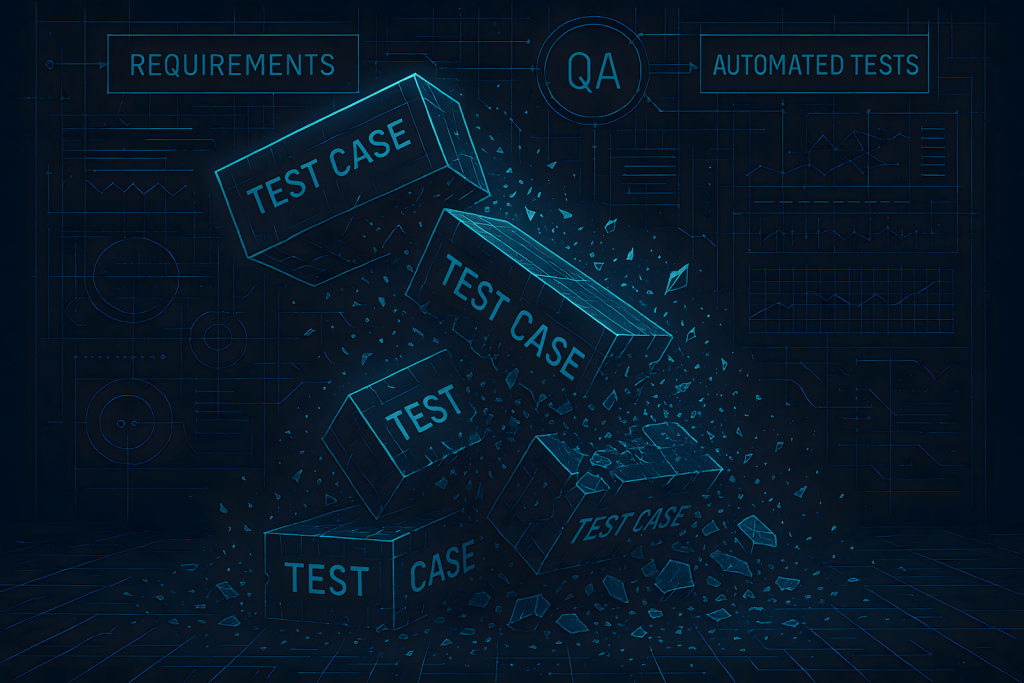
When the Tickets Look Perfect—Until They Don’t
I’ve worn the PM hat long enough to know this pain first-hand.
I once flooded a sprint board with what I thought were airtight tickets—thorough, QA-focused, every acceptance criterion spelled out. A seasoned PM would have spotted the gaps in ten seconds. I didn’t.
We missed steps. We duplicated features. Devs hit the sprint wall confused, deadlines slipped, and we had to rip out duplicate tickets and rework features that should have been nailed down in planning. The team blamed “process.” The real failure sat in the tickets themselves—and in my own blind spots.
That story repeats everywhere. When QA outcomes fall apart, people love to blame the framework. “Agile is too chaotic.” “Hybrid didn’t fit our culture.” “Waterfall slowed us down.” But when the dust settles, the post-mortem almost always points to the same culprit: weak test cases and the artifacts built on top of them.
Methodologies Don’t Fail—People Default
Teams under pressure fall back to their deepest training. You might start a project with the boldest Agile playbook, but when deadlines tighten and a few sprints go sideways, you retreat to the model you know best. For most, that means Waterfall.
Hybrid? In theory it balances the two. In practice it often becomes a polite label for “we’re winging it.” It’s what you call the mess after you’ve quietly abandoned the sprint rituals.
None of that is a methodology problem. It’s a human one: when the foundational work—your test cases—are weak, every framework eventually collapses.
👉 Compare: QA Methodologies Side-by-Side
The Real Fault Line: Test Cases
A framework is just scaffolding. The load-bearing beams are your test cases. If they’re sloppy, the entire project sags:
- Shallow coverage – user stories and acceptance criteria copied straight into cases without negative paths or edge conditions.
- Duplicate cases – bloat that hides real gaps and slows every regression run.
- Ambiguous pass/fail logic – a tester can’t tell if the case passed or failed without hallway conversations.
I’ve seen sprint after sprint derail because the cases weren’t built for failure. Happy paths everywhere; zero defensive checks. When defects escaped, it wasn’t the process it was the blueprint.
👉 Read: How to Create Effective Test Cases
Hybrid QA Isn’t a Free Pass
“Hybrid QA methodology” sounds sophisticated, and it can be if your foundation is solid. But hybrid multiplies the cost of weak cases:
- Unit and API layers rely on explicit boundaries and data contracts.
- UI tests need well-mapped flows and negative scenarios.
- Exploratory testing depends on gaps being intentional, not accidental.
If your cases are thin, hybrid simply spreads the weakness across every layer. You don’t get resilience; you get failure at scale.
👉 Explore: Hybrid QA Methodology Done Right
QAJourney.net uses Google AdSense and Ezoic for automated ad placements. These networks may use cookies or similar technology to serve relevant ads. Ad appearance is automatic, nothing here counts as an endorsement.
Prefer fewer ads or just want to help fund the next shiny gaming PC?
You can support the site directly and keep the content free for everyone: ☕ Buy Me a Coffee.
For details on how we handle data, see our Privacy Policy.
How Different Roles See the Same Mess
This isn’t just a tester problem.
- A PM may think a story is airtight while missing critical edge cases.
- A QA lead spots the missing negative paths immediately.
- A developer burns hours chasing duplicate tickets or ambiguous requirements.
Your methodology might look fine in a retrospective slide, but every role experiences the fallout differently. Unless the artifact, the test case bridges those perspectives, the process chart is theater.
👉 Survive: QA Pushback in the Real World
The Audit That Actually Matters
When I audit test cases now, I start with two questions:
- Negative coverage – where does this fail? If you can’t list the break points, you haven’t tested anything.
- Mapping to user stories – does each case trace back to an actual story or requirement, not just a ticket title?
A practical checklist you can drop straight into Jira or Confluence:
- Pre-conditions clearly defined
- Binary pass/fail outcome—no “tester discretion”
- Boundary value and error handling captured
- One case per unique behavior—no duplicates
- Direct traceability to a user story or acceptance criterion
- At least one deliberate negative test for every positive path
Run that audit and you’ll see the cracks long before a sprint demo exposes them.
Fixing It Without Derailing the Sprint
You don’t need a process revolution. Block two days inside a sprint and:
- Inventory – export all active regression cases.
- Cull duplicates – anything testing the same behavior goes.
- Plug gaps – add negative cases and boundary tests.
- Re-map – attach each case to a user story or requirement.
You’ll cut bloat, raise coverage, and regain dev confidence without rewriting the methodology deck.
Build Your Own Roadmap, Not Mine
Don’t treat QAJourney as a cookie-cutter spec. I came from a CS/TS background and learned QA by necessity. Communication was my edge; I built a team that could speak up and challenge gaps. Your strengths will differ. Use this as a roadmap, not a prescription.
The point isn’t to mimic my process. It’s to recognize that methodology is scaffolding; test cases are the structure. Fix those and Agile, Waterfall even a home-grown hybrid can actually work.

QA Overlord turned hybrid PM/Scrum survivor
Built QAJourney from the ground up—starting as a tester, learning PM the hard way, and proving that communication beats credentials. Known for flooding sprint boards with QA-heavy tickets, missing edge cases, then fixing the mess and turning it into a repeatable system. Still breaks brittle QA assumptions and rewrites the rules at QAJourney.net.
When sprints go sideways, he’s the one herding blockers and spotting gaps no one else wants to own.