Traditional QA isolates the testers. Modern QA buries them in velocity.
Both break when they forget the point: test what matters, when it matters early, fast, and hard.
If you’re still trying to pick a “side” between Agile and V-Model, you’ve already lost the plot.
Here’s how the best QA teams operate and why hybrid QA isn’t a compromise. It’s a weapon.
What Traditional QA Got Right (and Where It Fails Now)
Older methodologies were slow but structured. Control was the priority:
- Waterfall: Testing happens last. QA verifies a frozen product.
- V-Model: Each dev phase mirrors a test phase. Great on paper. Painful in reality.
- Manual Test Case Execution: Predictable, traceable, and painfully slow.
These worked in the era of quarterly releases and static systems. But in a CI/CD world? They’re a bottleneck.
See also: QA Framework for Software Quality
What Modern QA Promised (and Often Missed)
Modern approaches aimed to embed QA earlier. But reality didn’t always deliver:
- Agile: QA joins the sprint but gets stuck at the end of it
- Shift-Left: Test earlier—but often without proper environments
- Test Automation: Scales well until the suite becomes a maintenance nightmare
You get better speed, but not always better quality.
Related reads:
Why Hybrid QA Is the Only Model That Survives
We stopped choosing one framework and started choosing what works:
- 🧠 Agile for visibility and shared responsibility
- ⏩ Shift-Left to kill bugs before staging
- ⚠️ Risk-Based Testing to focus on what breaks the business, not what looks broken
A hybrid QA strategy adapts. It prioritizes signal, not ceremony.
More here: The Shift-Left Testing Revolution
Our Actual QA Methodology
Here’s how we test not in theory, but in daily practice:
🛠 Dev Phase
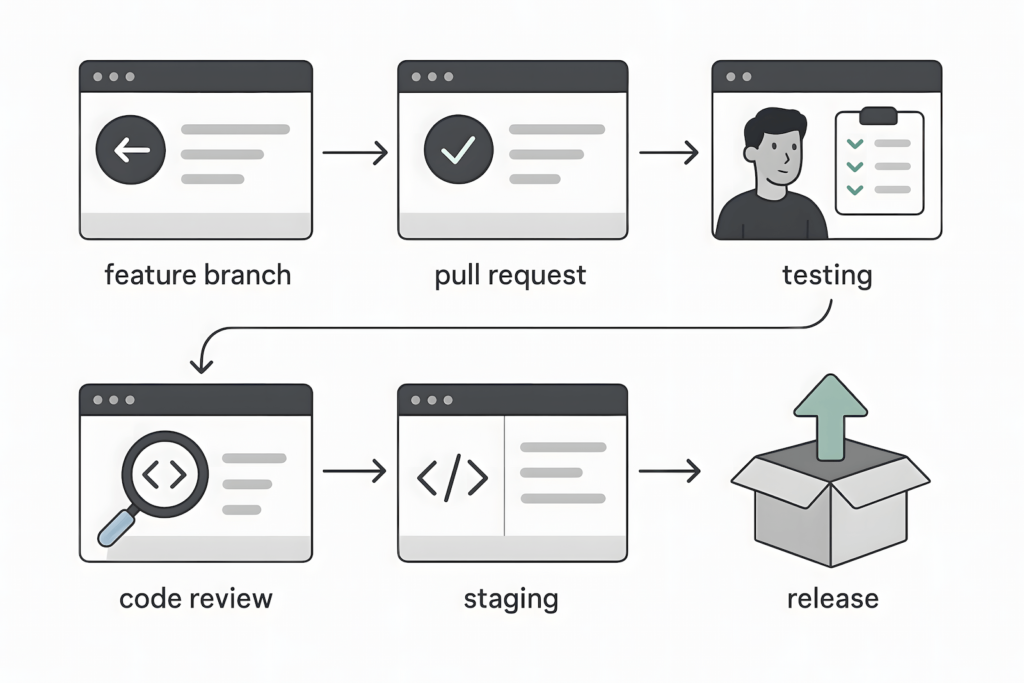
- Devs pick up tickets and write code in a feature branch
- A pull request is created
- CI runs: unit tests, linters, basic checks
- AWS auto-deploys a dedicated test link per PR
🧲 PR-Level Testing (Shift Left)
- QA gets the test link via Slack + Taiga ticket
- Manual testing + smoke automation run on the PR environment
- QA posts a PASS/FAIL verdict in the ticket and Slack thread
🔍 Code Review → Merge → Staging
- Sr Dev reviews the PR only after QA approval
- If approved, the PR is merged into staging
- QA does a light staging sanity check to ensure integration safety
Want to see the exact breakdown? Read how we test PRs before code review →
Why This Works
- 🔥 Faster bug detection: Most issues are caught before staging
- ♻️ Fewer rollbacks: Staging is no longer a minefield
- 📈 Faster sprints: QA is a parallel stream, not a final bottleneck
Built from: Adaptive QA Leadership
What to Ignore (Even If Everyone Else Does It)
- Full regression on every PR — inefficient and unsustainable
- “Test everything” dogma — coverage means nothing without context
- Slack-only verdicts — log decisions where your process lives
What to Do Next
If your QA still runs like a post-mortem report, it’s time to shift.
Test early. Focus on risk. Automate smart. Build a hybrid.
It doesn’t matter what your methodology is called. It matters if it works.
Want to See It In Action?
We open-sourced our full workflow. Use it, adapt it, or steal the structure.
📂 Browse the Hybrid QA Methodology Docs →





0 thoughts on “Traditional vs Modern QA: Why Hybrid QA Methodologies Actually Work”