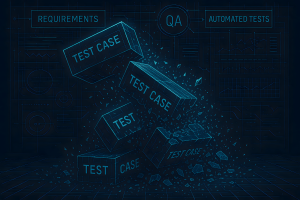
Your test suite passes. The demo looks clean. Then a user likes a post, the heart fills in red immediately, and three seconds later it quietly reverts because the request actually failed. Nobody on the team saw it happen, because nothing in the test pass was built to catch it.
This isn’t a story about QA falling behind devs. It’s about a specific kind of judgment that devs built out of necessity and QA hasn’t had the same forcing function to build, until now, when it quietly matters more than it used to.
The Skill Was Never About Having More Tools
An if-else statement works on any state you throw at it. So does a switch. So does a lookup table. All three technically function in almost any situation, which is exactly why picking between them isn’t a knowledge problem, it’s a judgment problem. Devs build that judgment because their work constantly forces the choice: this pattern fits here, that one doesn’t, and picking wrong costs you later even if the code runs today.
QA’s evolution hasn’t forced that same discernment by default. Automation frameworks multiplied. AI-assisted testing arrived. Platforms to test against kept expanding. All of that is real growth, but tooling breadth doesn’t automatically produce judgment about when a given testing approach actually fits what’s in front of you. That’s a different skill, and it’s the one this post is actually about.
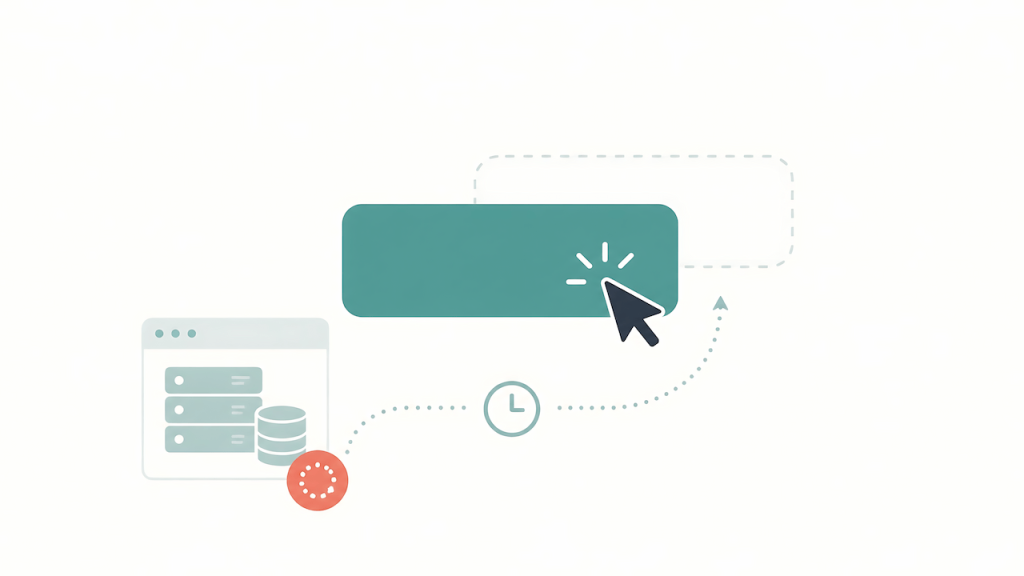
Optimistic UI updates are a clean example. The pattern updates the interface before the server confirms anything, which is exactly what makes it feel fast. It’s also exactly what makes it invisible to test. A happy path click resolves fine every time in a demo. The failure only shows up when something breaks after the UI already lied, briefly, on purpose. If your test pass never forces that failure deliberately, you will never see it, no matter how thorough the pass otherwise is.
Try it yourself
Toggle between the two update modes and watch how the same click behaves differently.
Request deduplication has the same shape. Multiple components fire the same call, one request actually goes out, and if the dedup logic drops a legitimate second request instead of correctly reusing the first one, nothing on screen tells you that happened. The UI looks identical either way until the data underneath quietly isn’t.
Why This Matters More Now Than It Used To
This isn’t new. Async state bugs have existed as long as async programming itself. What’s changed is how much surface area they now cover. More products lean on constant API calls than they used to, and AI-powered apps lean on this harder than most, streaming responses while a model works, optimistic UI while a request is in flight, dedup on repeated calls a user fires without realizing it. The pattern used to be a narrow slice of frontend work. It’s quietly becoming a default one.
That’s not a trend you need to chase. It’s a reason this specific judgment gap costs more now than it did five years ago, quietly, without anyone announcing it.
Where This Actually Gets Caught
We noticed this gap by accident, not by designing a process for it. A QA engineer on our team with a dev background kept catching these bugs specifically, and it took a while to notice that nobody else was catching the same class of issue nearly as often. She wasn’t following a different checklist. She was thinking in dev logic by habit, the same discernment about state and async behavior that devs build by necessity. That’s not a background you need to have. It’s a specific, learnable way of looking at a feature, and it’s worth naming plainly instead of leaving it as one person’s unexplained instinct.
Building the Judgment, Not Just the Checklist
Spot. The tell isn’t a code smell you grep for, it’s a question about the feature: does the UI update before a request resolves, or can the same action fire from more than one place at once. If either is true, this failure mode is possible, whether or not it’s ever shown up yet. This is the same discernment abstraction in QA testing already asks for, noticing where risk got relocated instead of eliminated.
Test or solve it. Once you’re alert to it, don’t wait for it to fail on its own. Force the condition. Kill the request mid-flight and confirm the UI actually reverts instead of staying frozen in its optimistic state. Fire the same action twice in quick succession and confirm only one real request lands. This is deliberately sad-path testing, the kind happy path testing rarely surfaces because nothing about a clean run points you toward it.
Automate it, once you’ve confirmed it matters. A short Playwright check can force the failure and assert the rollback actually happens:
javascript
await page.route('**/api/like', route => route.abort());
await page.click('[data-testid="like-button"]');
await expect(page.locator('[data-testid="like-button"]')).not.toHaveClass(/liked/);
Whether this belongs permanently in a regression suite or was a one-time architectural check is itself a judgment call, not a default yes.
Know what to ask AI for. Once you understand the mechanism, you can prompt an AI to scan a PR for places where UI state updates before a request resolves, or where the same mutation could plausibly fire from two components. AI can execute that scan quickly. It can’t supply the judgment that tells you the scan is worth running in the first place. That still has to come from you.
A Coverage Question, Not a New Identity
Before this, the question “does this project even use these patterns” wasn’t one most QA engineers could answer on sight. Now it is, and that’s the actual value here, not a new checklist to memorize, but the ability to notice something that used to be invisible and decide, project by project, whether it belongs in scope. Some projects won’t need it. Others, especially the API-heavy and AI-powered ones, increasingly will.
This was never about competing with devs for the spotlight. Devs will keep getting it, that’s just where attention goes, and that’s fine. QA’s work here is closer to working in the shadows to boost the light, the part nobody names in a demo or a launch post, but the part that keeps the visible thing from breaking in front of a user. Sharpening this kind of judgment isn’t catching up. It’s making sure what’s underneath the light actually holds, and that’s not a competition, it’s the same team building the same product, from different angles.
If your team already thinks this way about testing scope, hybrid QA methodology is the broader frame this fits into, and it’s worth checking whether other invisible-by-design failures, like caching quietly corrupting QA signal, are already sitting in your blind spot too.
Spent enough time watching a clean test pass hide a broken feature to know the checklist was never the problem.