Regression testing is not glamorous work. It does not get talked about at conferences and it does not make it into LinkedIn posts about the future of QA. What it does is tell you whether the fix you shipped last Tuesday broke the checkout flow that nobody touched. That is the job. Every code change, every bug fix, every refactor creates risk in places the developer did not look and the spec did not describe. Regression testing is the system you build to find those places before your users do.
The problem most QA guides do not address honestly is that building a regression suite that actually works is harder than building one that looks like it works. A suite that runs green on every build and misses two production bugs a quarter is not a working regression suite. It is a comfort blanket with a CI badge. The difference between those two outcomes is not the tools you use or how many tests you have. It is whether the suite was built around what actually breaks on your product or around what was convenient to automate.
This post covers how to build and maintain regression coverage that catches real bugs, how to decide what goes in the suite and what stays manual, and what AI changed about how regression work actually gets done in 2026.

What Regression Testing Is Actually Protecting
Every line of code in a product has dependencies that are not documented anywhere. The developer who fixed the password reset bug did not know that the session token rotation logic shared a utility function with the checkout flow. The QA engineer who tested the fix checked the password reset flow, confirmed it worked, and moved on. Nobody tested checkout. Checkout broke in production three days later.
That is not a process failure. That is what software looks like when it is built by humans under time pressure. Dependencies get created without being mapped. Shared logic gets modified for one purpose and breaks something adjacent. Regressions are not bugs introduced by careless developers. They are the natural consequence of a codebase that has been alive long enough to develop invisible connections between things that look unrelated on the surface.
Regression testing works when it is built around that reality. The suite covers the things that are actually connected to what changes most frequently, not the things that were easiest to automate when someone had an afternoon to write tests. Revenue flows, authentication, data integrity, core user paths: these get tested every cycle not because the spec says so but because the blast radius when they break is large enough to justify the maintenance cost of keeping those tests healthy and current.
What to Put in the Suite and What to Leave Out
The most common regression suite failure mode is not having too few tests. It is having too many tests that cover the wrong things. A suite of 500 tests where 300 of them are testing UI states that change every quarter and 200 are testing core behaviors that never change is a maintenance problem dressed up as coverage. Every time the design updates, 300 tests fail for reasons that have nothing to do with broken functionality. The team learns to ignore failures. The suite becomes noise.
The tier approach that actually works in practice maps tests to how much it matters when something breaks and how likely that something is to be affected by code changes. Critical tier is revenue flows, authentication, data integrity. These run every cycle, get automated first, and get fixed the same day they break. High tier is core feature correctness and key user paths. These rotate based on what changed in the sprint. Medium and low tier is polish, edge cases, and areas of the product that are stable and rarely touched. These get manual exploratory treatment and get automated over time if they start showing up in the bug history.
The deletion rule that most teams resist but every mature QA practice eventually adopts: if a test has not failed in six months and the feature it covers has not changed, question whether it exists for the right reasons. A test that never fails is either testing something that never breaks, which means it provides no signal, or testing something in a way that cannot actually detect the failure mode that matters, which means it is false confidence. Neither version belongs in a suite you are paying maintenance cost to keep alive. Delete more than you add and the suite gets faster, more reliable, and more trusted over time.
Manual vs Automated: The Actual Decision
Automation earns its place when a test is stable, repeatable, and will run enough times to justify the cost of writing and maintaining the script. The break-even calculation is simple: if a test runs less than ten times before the feature it covers changes enough to break the script, the automation cost exceeded the manual execution cost and you spent time on something that provided negative value.
Manual testing belongs in regression when the check requires human judgment that a script cannot replicate. UX quality, visual consistency, whether a flow feels right to a real user navigating it for the first time: these do not have assertions you can write. They require a human to actually use the product and notice when something is wrong. Teams that automate everything end up with suites that catch functional regressions and miss the UX degradation that makes users stop trusting the product.
The hybrid approach that works in practice: automate the stable core, manually test anything that recently changed or requires judgment, and use risk-based triage to decide what gets manual coverage each sprint rather than running the same manual checklist every cycle. The shift-left testing approach reduces the regression burden at the back of the sprint by catching issues earlier, which means the regression suite can stay focused on verification rather than discovery.
Flaky Tests Are a Trust Problem, Not a Technical Problem
Flaky tests are the most destructive thing that can happen to a regression suite because they turn the suite from a signal into a question mark. When a test fails intermittently without a code change, the team learns to run it again before investigating. When running it again becomes standard practice, failures stop meaning anything. The suite becomes the boy who cried wolf and the actual regression that caused a real failure gets dismissed as another flake until it surfaces in production.
The root causes of flakiness are almost always the same: race conditions, improper wait strategies, test interdependencies where one test relies on state left by another, and environment dependencies where the test assumes infrastructure that is not consistently available. None of these are fixed by running the test again. They are fixed by finding the root cause and eliminating it, or by quarantining the test and scheduling it for investigation rather than leaving it in the main suite where it corrupts the signal.
The threshold for tolerance is zero. A flaky test either gets fixed or gets removed. There is no middle ground where a test that fails twenty percent of the time earns a place in a suite that is supposed to provide deployment confidence. Playwright’s built-in retry logic and explicit wait strategies handle the most common timing issues. For anything more complex, the test is usually revealing a real problem in the application’s state management that is worth finding regardless of whether the test was the trigger.
CI/CD Integration Is Not Optional
A regression suite that does not run automatically on every meaningful code change is not a regression suite. It is a manual process that runs occasionally when someone remembers to trigger it. The value of regression testing comes from the feedback loop: code changes, tests run, failures surface before the change ships. Break that loop and you have coverage theater.
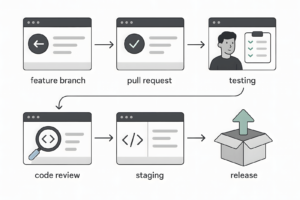
The practical implementation for most teams is running critical tier tests on every pull request, broader regression nightly, and full suite before releases. The GitHub Actions configuration for a Playwright suite running on PR is a few lines:
yaml
name: Regression Tests
on: [pull_request]
jobs:
  test:
    runs-on: ubuntu-latest
    steps:
      - uses: actions/checkout@v3
      - name: Run critical regression tests
        run: npx playwright test --grep @critical
The @critical tag targets only the tests that matter for a PR check. Full suite on nightly. This keeps PR feedback fast enough that developers actually wait for it rather than merging and moving on.
What AI Changed About Regression Work
AI changed two specific things about how regression testing gets done and left everything else the same.
The first is test surface analysis before writing a single test. Feeding a feature description, a diff, or a set of acceptance criteria into an AI conversation and asking what else could break based on this change produces a dependency map faster than manual analysis. This is not the AI telling you what to test. It is the AI accelerating the thinking that used to require sitting with the codebase long enough to understand the invisible connections. The judgment about which dependencies actually matter for this sprint still belongs to the QA engineer who knows the product.
The second is the regression risk that AI-generated code creates. When a development team ships features built with AI coding tools, the code can satisfy every specified requirement and still introduce behavior that was never defined in the original prompt. That behavior passes all the tests written against the spec because the tests were also written against the spec. The undefined paths only surface when a user does something the prompt never described. The regression implications of AI-generated code go deeper on this specific problem, because the standard regression approach does not cover it adequately and most teams have not updated their suites to account for it. The hybrid QA workflow for AI-generated code covers what the testing layer on top of AI-generated features actually needs to look like.
The thing AI did not change: the judgment about what goes in the suite, when to delete tests, how to triage flakiness, and what constitutes a meaningful failure versus a false positive. Those calls accumulate through real project experience and they are the part of regression work that separates a suite that provides deployment confidence from one that provides the appearance of it.
Keeping the Suite Alive
A regression suite that is not actively maintained degrades. Tests written against features that were redesigned last quarter still run green because the selectors still find elements that still exist, but they are testing a flow that no longer reflects how the product actually works. The coverage looks healthy. The confidence is false.
The maintenance practices that keep a suite useful over time are simple and consistently ignored. Update tests when features change, as part of the same PR that ships the change rather than as a follow-up ticket that never gets prioritized. Audit the suite quarterly and delete anything that has not provided signal in the last two release cycles. Tag tests by feature area so that a change to the payment module can trigger targeted regression on payment-adjacent tests rather than running everything. Track flakiness rates and treat an increase as a signal that something in the application’s infrastructure or state management has changed.
The regression suite rebuild post covers what to do when the suite has already degraded past the point of incremental maintenance, because sometimes the right call is starting over with a smaller, more honest suite rather than trying to fix a thousand tests that were never quite right to begin with.